Beyond Book Bans: When the Target Becomes the Library Itself
Book challenges are increasingly evolving into challenges against libraries themselves, threatening funding, services, and communities' access to knowledge and opportunity.
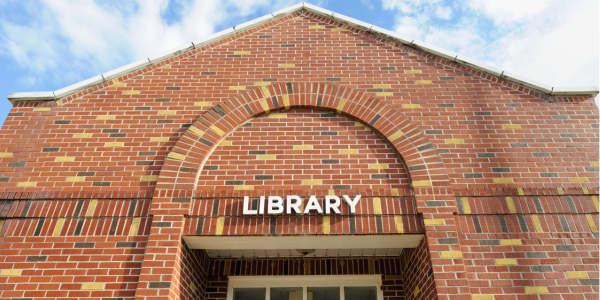
For the past several years, debates over school and public libraries have centered on individual books. Which titles belong on the shelves? How should concerns be addressed? Who gets to decide? Those questions are still important. But in many communities, the conversation has begun to shift.
Instead of asking whether a particular book should remain available, some elected officials are asking a much bigger question: Do we still need libraries at all, or at least, do we need to fund them the way we always have?
It's a troubling evolution. Once a library is portrayed primarily as a source of controversy rather than a public resource, it becomes easier to argue that taxpayer dollars could be better spent elsewhere. And that should concern anyone who values education, literacy, and informed communities, regardless of where they stand on any individual book.
From Books to Buildings
This shift is becoming increasingly visible across the South.
In Florida's Clay County, after years of controversy surrounding school library collections, district leaders began publicly questioning whether traditional libraries should continue to exist in high schools at all. As reported by WUSF in "After Book Bans, Florida Officials Question Traditional Libraries," proposals included replacing libraries with research centers, collaborative workspaces, or school stores while reducing or eliminating traditional book collections. The discussion wasn't simply about modernizing library spaces, it reflected a broader willingness to reconsider whether libraries themselves remain a worthwhile investment after years of political conflict.
That represents a significant shift. Instead of asking, "How should libraries serve students?" some leaders are now asking, "Do we still need libraries in their current form?"
When the conversation moves from evaluating books to questioning the existence of libraries themselves, we're no longer debating collection development. We're debating whether libraries deserve to remain a cornerstone of public education.
Budget Pressures Create Easy Targets
Libraries have always operated within financial constraints. School districts make difficult budget decisions every year. Public libraries often rely on local funding that fluctuates with the economy. Every dollar has competing priorities. But today's conversations are happening in a unique context.
Years of organized book challenges have consumed enormous amounts of staff time and public resources. Librarians have reviewed collections, responded to records requests, attended hearings, documented decisions, and defended professionally selected materials. Districts have diverted employees from serving students to processing challenges.
Ironically, those same costs are sometimes cited as evidence that libraries themselves have become too expensive. It's a circular argument: Create a system that overwhelms libraries. Point to the resulting expense and controversy. Then suggest the institution itself is the problem.
The real issue isn't that libraries have become less valuable. It's that many have been required to devote increasing resources to responding to political challenges instead of serving readers.
"No One Uses Them Anyway"
Another common argument is that students simply don't read physical books anymore. It's true that digital resources are an increasingly important part of education. Modern libraries offer e-books, online databases, makerspaces, technology instruction, collaborative work areas, and multimedia resources alongside print collections.
But presenting digital learning as a replacement for books creates a false choice. The strongest libraries already do both.
Modernizing library spaces doesn't require eliminating the collections that make those spaces unique. Across the country, libraries have successfully evolved while continuing to provide professionally curated collections that support literacy, research, and lifelong learning. Innovation and books are partners, not competitors.
Public Libraries Are Feeling the Pressure Too
The same conversation is happening beyond school campuses.
Book Riot recently highlighted how proposals to reduce or eliminate property taxes could have unintended consequences for public libraries. Because libraries in many states rely heavily on local property tax revenue, substantial tax reductions don't simply shrink government budgets, they threaten one of the primary funding sources that keeps library doors open, collections current, and community programs available. The article notes that discussions about tax relief rarely include an equally detailed conversation about which public services will absorb those losses.
Libraries often become easy targets because many people don't realize just how much they provide until those services begin disappearing.
Public libraries are far more than buildings that lend books. They help job seekers prepare resumes and apply for employment. They provide internet access for families who cannot afford broadband. They host early literacy programs, tutoring, technology classes, tax assistance, community meetings, and local history archives. During emergencies, they often become trusted information hubs.
When funding is reduced, those services don't disappear because they're unimportant. They disappear because they're expensive to provide well.
Communities Are Showing That Libraries Matter
Fortunately, many communities are pushing back.
Earlier this month, residents in Hernando County, Florida, successfully rallied to save the West Hernando Branch Library after officials considered closing the facility. As the Tampa Bay Times reported, community members packed meetings, spoke with local officials, and demonstrated that their library wasn't simply a building filled with books, it was a vital community resource worth protecting. Their advocacy worked. The library remained open because residents reminded elected leaders exactly why public libraries exist in the first place.
That story offers an important lesson. Libraries don't survive simply because they've always existed. They survive because communities make it clear that they matter.
Libraries Are an Investment, Not an Expense
It's easy to think about library funding as another line item in a budget. It's harder (but more important) to think about what that funding purchases. A well-funded school library provides professionally selected materials that support curriculum while encouraging independent reading. It gives students opportunities to discover interests they didn't know they had. A well-funded public library creates one of the few truly public spaces where everyone is welcome regardless of age, income, education, or background.
Libraries represent one of the best returns on public investment because they multiply opportunity. One book purchased by a library may be read dozens, or even hundreds, of times. One internet connection may help multiple people find employment. One children's storytime can spark a lifelong love of reading. One librarian may help a student discover a passion that shapes an entire career. Those benefits extend far beyond the library walls.
Why This Matters
For several years, debates over libraries have focused on individual titles. Today, we're seeing something different.
Once libraries become defined primarily by controversy instead of service, it becomes much easier to ask whether they're worth funding at all. That's why the current moment is so important. The conversation is no longer just about which books belong on the shelves, it's increasingly about whether the shelves themselves deserve public investment.
Communities should absolutely have conversations about budgets, evolving educational needs, and how libraries can best serve today's readers. But those discussions should begin with a recognition of what libraries contribute, not with the assumption that they are expendable.
When we stop asking, "How can we strengthen our libraries?" and start asking, "Do we need them at all?" we've moved beyond book bans. We've begun questioning one of our most important public institutions.
Libraries have survived technological revolutions before. They adapted to radio, television, personal computers, the internet, smartphones, and artificial intelligence. Their strength has never come from preserving one format or resisting change. Their strength comes from preserving something much more important: the idea that everyone deserves the opportunity to learn, explore, question, and grow.
Communities will always face difficult budget decisions. Responsible stewardship of taxpayer dollars matters. But before asking whether library funding should be reduced, we should first ask what libraries make possible. They help children become readers. They help adults become lifelong learners. They strengthen schools, neighborhoods, and local economies. They preserve history while preparing communities for the future.
And in an era when access to information is increasingly contested, they remain one of the few institutions built on the principle that knowledge should be available to everyone, not just those who can afford it. That isn't an outdated idea. It's one worth investing in.