Protecting Stories, Preserving Democracy: Inside Texas Freedom to Read Project
The Texas Freedom to Read Project unites ordinary Texans against book bans, amplifying local stories, mobilizing communities, and protecting the freedom to read through grassroots action.
In 2021, Anne Russey was disturbed by the amount of book challenges she noticed in her Texas school district—they all seemed politically driven. Then came an almost-disaster with author Jerry Craft. A small group of people protested his upcoming school visit, claiming his graphic novels that depict aspects of his son’s true experience of being a Black student in a predominantly white school were promoting Critical Race Theory. Much to Anne’s dismay, the district pulled his books off the shelves and canceled the visit. “The claims were outrageous and demonstrably false. I was thinking about not just kids of color but ALL kids—my kids—missing out on being able to access these stories.” Ultimately, the district ended up reviewing the book in a committee, putting it back on the shelves, and rescheduling the author visit. But it left Anne wondering what other books were being taken off the shelves for political reasons.
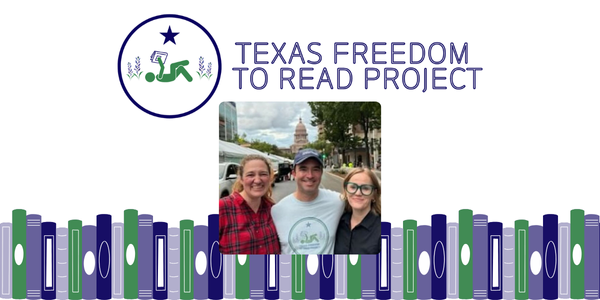
While all this was going on, two other individuals were also witnessing censorship injustices. Laney Hawes participated in a committee that was tasked with reviewing Anne Frank’s diary for appropriateness in schools. And Frank Strong witnessed PACs pouring money into local school boards to buy seats and subsequently began a voters guide for book-loving Texans. Anne, Laney, and Frank all connected on Twitter, supporting each other’s work and realizing they made a great team. They formed the Texas Freedom to Read Project.
Initial Challenges for the Group
Starting out wasn’t all smooth sailing. They had to figure out what type of structure they wanted to utilize. A 501(c)3? A PAC? They turned to two experienced anti-censorship advocates for help: Stephana Ferrell with Florida Freedom to Read Project and Tasslyn Magnusson with EveryLibrary. With their guidance, the trio decided being a 501(c)3 would best meet their needs. “While we can’t endorse politicians or rank them, we do as much as possible to inform and educate people in our state and community about the role elected leaders play in censorship and book ban decisions,” Anne said. With that hurdle surmounted, it was time to tackle the next challenge… the sheer size of Texas.
With over 1,200 school districts and approximately 5.5 million public school students in the state, it’s impossible to monitor every school district and library. However, they can amplify stories from different communities and bring attention to unnecessary censorship. “We try to empower others to go to meetings, launch petitions, start email-writing campaigns, and help people create actionable plans.” Their group recognizes every Texas community is going to be unique and different, and will have different needs. Yet they continue with their goal of elevating voices from all over the state.
Victories in Texas
In addition to amplifying what's happening in local communities, Anne, Frank, and Laney have made other impacts on the freedom to read. One notable accomplishment involved the nonfiction middle grade book Colonization and the Wampanoag Story by Linda Coombs, an indigenous author. The book recounts the history of European settlement in New England through the perspective of the Wampanoag people, highlighting resilience amid dispossession. A bookshop owner and advocate, Teresa Kenney, found out through a public records request that the book had been challenged in her public library, and after a committee review, it was relabeled as juvenile fiction. The Texas Freedom to Read Project worked with Teresa to magnify the story. They hosted a petition on their website and wrote a powerful blog post as well as letters and emails. They even created a statement with PEN America, EveryLibrary and others decrying the idea that an indigenous perspective is fiction. The story made national and international news. After all the attention, the committee reversed its decision and put the book back where it belonged, in the nonfiction section.
The trio has also had some success with legislative sessions and being able to help stop bad public library bills with the assistance of other organizations. They did this by working with a strong coalition of library and free speech advocates and allies to mobilize Texans to join librarians, students, and authors to reach out to their representatives during committee time, creating a high volume of calls and emails that ultimately would sway the decision. This grassroots pressure demonstrated the power of collective action and showed lawmakers that communities value their libraries and the freedom to read.
Encouraging Others to Join the Fight
In order to motivate others to get involved, Anne recommends making things as simple as possible for people. “All you can do is send an email? Here’s a template. All you can do is a phone call? Here’s a script. Able to show up for a meeting? Here are some ideas for what you can say.” Plus, Anne suggests people in communities who show up to a public meeting to fight for the freedom to read can demonstrate unity and make a statement by doing something as simple as all wearing blue for books or something similar. She also thinks virtual meetings are helpful to troubleshoot, share victories and needs, and discuss what is coming for the next legislative session.
By lowering barriers and offering clear entry points, these advocates are empowering more people to step into the fight, no matter their comfort level or capacity. Small actions, when multiplied across a community, create a ripple effect that amplifies awareness and influence. This approach not only grows the movement but also helps individuals feel connected, supported, and part of a larger collective effort to defend the freedom to read.
Working on the Present, Looking to the Future
The crew at Texas Freedom to Read Project are currently trying to get back to local focus, while bracing for the impact of recent legislation. “A catastrophic school library book bill is coming, and we are trying to focus back on how we can support local folks through this.” They are also working on sustainability for the organization. This means building long-term capacity, securing resources, and creating systems that will allow their advocacy to continue regardless of shifting political landscapes.
Ultimately, Anne, Frank, and Laney want book censorship to become a thing of the past. “We’d love to be able to focus more on literacy and helping kids and adults fall in love with their libraries and books.” They want folks to return to feeling joy and love for the library, and have respect and integrity for librarians as professionals. Their vision is a future where communities celebrate stories in all their diversity and libraries once again serve as safe, welcoming spaces for everyone.
Conclusion
The story of Texas Freedom to Read Project is a testament to what can happen when ordinary people refuse to accept censorship as inevitable. Anne, Laney, and Frank prove that persistence, collaboration, and community action can protect access to books and amplify marginalized voices, even in the face of overwhelming challenges. Their work reminds us that defending the freedom to read is not only about safeguarding stories, but also about preserving democracy, empathy, and the right of every person to learn, grow, and be seen.