Stop Calling Book Banning a "Culture War"
Book censorship isn't a culture war. It's about protecting First Amendment freedoms, preventing viewpoint discrimination, and preserving access to diverse ideas in public libraries.
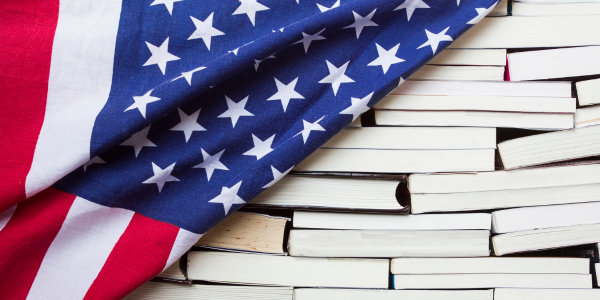
Open almost any news story about book bans, school library restrictions, or challenges to classroom materials, and you'll likely see the same phrase: the culture war over books.
It's become such common shorthand that many people no longer question it. But the label itself deserves scrutiny.
Calling today's wave of censorship a "culture war" implies that two equally legitimate sides are simply disagreeing over cultural preferences, that this is another political dispute in an endless cycle of partisan conflict. It suggests that whether a student can access a book in a public school library is merely one issue among many in a broader ideological battle.
That framing misses what is actually at stake.
This isn't fundamentally a fight over culture. It's a fight over whether Americans retain the freedom to encounter a wide range of ideas in publicly funded spaces without government officials removing materials because they disagree with a particular viewpoint. At its core, this is a question of intellectual freedom and First Amendment principles.
A Manufactured Crisis
Supporters of widespread book removals often describe school libraries as facing an epidemic of "inappropriate" materials. But the current wave of challenges did not emerge because parents across the country suddenly began independently discovering the same books.
The movement was organized.
National advocacy organizations developed lists of books to target, model policies for school districts, scripts for public meetings, and campaigns encouraging individuals to challenge dozens (or even hundreds) of titles simultaneously. Many districts received nearly identical complaints, often using the same language or challenging books that had never been checked out by the complainant.
That doesn't mean every parent who files a challenge is acting in bad faith. Parents have every right to raise concerns about their children's education and to participate in decisions affecting their families. Public schools should welcome respectful community engagement.
The manufactured crisis lies elsewhere: in portraying school libraries as dangerous institutions requiring mass intervention and in encouraging broad campaigns to remove books based on ideological objections rather than individualized educational concerns.
When isolated disagreements become coordinated efforts to reshape what entire communities can read, the conversation changes.
Public Libraries and School Libraries Serve Everyone
Public institutions are designed to serve diverse communities. No school library collection will perfectly reflect every family's values. Nor should it. Instead, libraries seek to provide age-relevant materials representing different experiences, perspectives, histories, and ideas. Some books resonate with one reader while others may not. That's the strength of a library collection.
Parents already possess significant authority over what their own children read. They can guide choices, set boundaries, request alternative assignments when appropriate, and have ongoing conversations with educators. What they do not have is the right to decide what every other family may access.
When books are removed because someone objects to the ideas they contain, access disappears not only for one student but for every student.
This Is About Viewpoint Discrimination
Much of today's censorship targets books addressing race, LGBTQ+ identities, religious diversity, immigration, disability, or difficult periods of American history. Not every challenged book fits this pattern. But the overall trend is difficult to ignore.
When government bodies remove materials because they dislike the perspectives those books express, they move beyond ordinary collection management and toward viewpoint discrimination. That distinction matters.
Libraries regularly add, replace, relocate, and remove materials for legitimate reasons including age, condition, circulation, curriculum alignment, duplication, and collection balance. Those professional decisions are part of responsible library management.
Removing a book because officials disagree with its message is something fundamentally different. The First Amendment exists precisely because governments should not decide which viewpoints citizens are permitted to encounter.
The Chilling Effect Extends Beyond Removed Books
The books that disappear from shelves are only the visible part of the story.
Authors increasingly report hesitation from publishers regarding subjects likely to attract organized campaigns. Teachers describe uncertainty about classroom discussions. Librarians face threats to their jobs or professional licenses. Publishers and booksellers must weigh whether controversial titles are worth the financial and legal risks.
Sometimes books never reach library shelves because someone anticipates future challenges. Sometimes authors decide not to write certain stories. Sometimes educators avoid selecting otherwise valuable materials simply because they fear becoming the next headline. This invisible self-censorship narrows the marketplace of ideas long before an official challenge ever occurs.
Communities Are Being Asked to Choose
One of the most significant consequences of coordinated censorship campaigns is that school communities are increasingly forced into a difficult position. They can defend established review policies, trust trained educational professionals, and uphold principles of intellectual freedom. Or they can gradually surrender those principles, one challenged title at a time.
Rarely does censorship begin with demands to empty every library shelf. Instead, it often advances incrementally. Remove one book. Then another. Create new restrictions. Require additional approvals. Increase legal risks. Expand challenge procedures. Each individual step may appear modest. Taken together, they steadily shift the default from broad access toward limited access.
The question facing communities is not whether every book belongs in every school library. Professional librarians have always made developmentally appropriate collection decisions. The question is whether organized pressure campaigns should replace professional expertise and established review processes.
Words Shape Public Understanding
Language influences how people interpret events. Calling this movement a "culture war" suggests that everyone is simply participating in another political disagreement. Calling it a debate over intellectual freedom highlights something different: whether public institutions remain committed to providing access to diverse ideas. One description centers politics. The other centers on constitutional principles.
Americans have long disagreed about literature, education, morality, and parenting. Those disagreements are healthy in a democratic society. What makes the current moment different is not that disagreements exist. It is that organized efforts increasingly seek to restrict what everyone else may read in publicly funded institutions.
That's more than a cultural disagreement. It's a question about the role of government in determining access to information.
The Freedom to Read Protects Everyone
The freedom to read has never depended on universal agreement about books. In fact, it exists precisely because people disagree. Every generation has produced books that some readers considered controversial, uncomfortable, or inappropriate. Many of those same books later became classics that helped shape our understanding of history, identity, justice, and human experience.
Protecting the freedom to read does not require anyone to like every book. It does not require parents to allow their own children unrestricted access. It does not require agreement with every author's ideas. It simply requires acknowledging that public institutions should not suppress ideas because a particular viewpoint has become politically unpopular.
Today's challenged books may center on race, LGBTQ+ identities, or historical injustice. Tomorrow's could involve religion, economics, environmental policy, immigration, or any other topic that falls out of favor with those in power. Once viewpoint-based censorship becomes acceptable, no perspective remains permanently protected.
That's why the First Amendment safeguards ideas across the political spectrum.
Let's Call It What It Is
The phrase "culture war" may be convenient, but it obscures the real issue. This is not simply a disagreement over culture. It is a debate about whether publicly funded libraries and schools should remain places where students can encounter a broad range of ideas, or whether organized campaigns should determine which viewpoints are available.
It is about whether constitutional protections continue to matter when ideas become controversial. It is about whether access to information depends on educational value or political popularity.
Most importantly, it is about preserving the principle that in a free society, the answer to ideas we dislike is not government censorship but more conversation, more reading, and more opportunities to think critically.
When we describe this moment accurately, we also clarify what is worth defending. Not one book. Not one ideology. But the enduring freedom to choose what we read, and the right of every student and community to access ideas without viewpoint discrimination.