What Students Lose When They Can’t Choose Their Own Books
Students lose motivation, autonomy, identity development, critical thinking, representation, joy, and equity when schools restrict their ability to choose their own books.
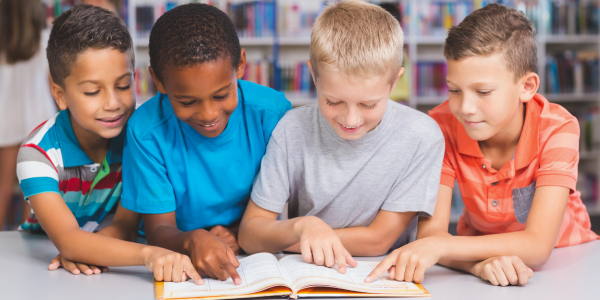
Why Self-Selection, Intellectual Autonomy, and Identity Development Matter More Than Ever
Across the country, book bans and “approved lists” are becoming a new normal in schools. Classrooms are being stripped of diverse texts, library shelves are thinned out, and students are asked to choose from sanitized, restricted, or ideologically filtered options. What many adults don’t realize is that when students lose the ability to choose what they read, they lose far more than access to a single book. They lose academic opportunities, emotional development, and the foundations of lifelong learning.
At the Freedom to Read Project, we talk often about the civic and ethical consequences of censorship. But today, we want to focus on something just as urgent: the educational and developmental costs for students when self-selection disappears.
Choice isn’t a luxury in reading. It’s the engine that makes literacy meaningful, empowering, and transformative. When schools narrow or eliminate students’ ability to choose books that speak to them, they hinder learning in ways that reverberate for years.
Below, we explore why self-selection matters and why restricting it harms students’ intellectual autonomy, identity development, and academic growth.
1. Choice Is the Heart of Literacy Engagement
We all know what happens when young people are told, “You have to read this.” Motivation drops. Curiosity fades. Reading becomes a chore rather than an opportunity.
Decades of literacy research (from the work of Dr. Stephen Krashen to the American Library Association’s Office of Intellectual Freedom) consistently shows that students read more, read better, and are more engaged in the story when they choose their own texts.
Self-selection increases:
-
Reading volume: Students voluntarily spend more time with books they’ve picked themselves.
-
Reading stamina: They persist longer with challenging texts if they care personally about them.
- Comprehension: Interest helps them absorb more, make deeper connections, and retain information.
When students are restricted to narrow lists (especially those created for political reasons rather than educational ones), reading becomes mechanical. Students read for compliance, not curiosity, joy, or growth. And once reading becomes a task, not a choice, it is much harder to rebuild motivation.
2. Students Lose Intellectual Autonomy
Intellectual autonomy is the ability to think, question, evaluate, and form opinions independently. Schools are supposed to nurture it, not limit it.
When students can choose their own books, they learn to:
-
Follow their interests
-
Recognize their own learning needs
-
Evaluate credibility and quality
-
Build decision-making skills
- Reflect on what moves them, challenges them, or expands their worldview
Removing choice teaches a very different lesson: that someone else should decide what ideas they can handle and which perspectives they can consider.
This is especially damaging in adolescence, when students are developing a sense of agency. Limiting their ability to choose books communicates that their thoughts, questions, and experiences are untrustworthy or inappropriate. It sends a message that intellectual exploration is dangerous instead of empowering.
We cannot cultivate critical thinkers by narrowing their intellectual world.
3. Choice Supports Identity Development
Young people need stories that help them answer questions like:
-
Who am I?
-
Where do I belong?
-
What do I value?
- What kind of person do I want to become?
Self-selected reading is one of the most powerful tools for identity development. Students gravitate toward books that speak to their emerging sense of self, books that help them understand friendships, families, challenges, relationships, culture, dreams, and fears.
When schools restrict access based on ideology, they disrupt this crucial developmental process. Students lose the chance to encounter:
-
Characters who look like them or live like them
-
Characters who don’t look like them or live like them
-
Stories that validate their experiences
-
Stories that broaden their understanding
- Stories that help them navigate the complexities of growing up
Identity development thrives on exploration, not confinement. The human mind grows through contact with difference, novelty, and affirming representation, not through curated safety that privileges some identities and erases or restricts others.
- Students Lose a Safe Place to Explore Difficult Topics
Books give students a safe, private place to explore the questions they may not feel comfortable asking out loud. Reading allows them to encounter challenging topics (grief, identity, bullying, racism, family changes, mental health, body image, love) in a space where they can process quietly and at their own pace.
When certain books are taken away, the problems they address don’t disappear. Students simply lose a healthy, developmentally appropriate resource for understanding their world.
Removing books about difficult topics has the opposite of the intended effect: it leaves young people uninformed, isolated, and less prepared.
A book can’t hurt a child, but taking away a book that could help them absolutely can.
5. Students From Marginalized Communities Lose Representation
Students who rarely see themselves reflected in textbooks, television shows, or community leadership rely on books to fill the gaps. For marginalized students (students of color, LGBTQ+ students, immigrant students, religious minorities, students with disabilities, etc.) self-selection is often the only way they encounter stories that affirm their existence.
Removing books doesn’t “protect” these students. It erases them.
When a book that mirrors a student’s life is pulled from shelves, the message received is clear:
Your story is inappropriate.
Your identity is controversial.
Your experience doesn’t belong here.
That is not education.
That is exclusion.
6. Students Lose the Tools They Need for Critical Thinking
Critical thinking develops when students compare texts, wrestle with new ideas, and encounter multiple viewpoints. Choice naturally exposes them to:
-
Diverse genres
-
Contrasting worldviews
-
Different writing styles
- Complex questions with no single answer
Book bans and restrictions flatten the intellectual landscape. Students are left with narrow, sanitized materials designed to avoid controversy rather than deepen understanding.
You cannot teach critical thinking by limiting what students are allowed to think about.
7. Choice Builds Confidence and Academic Independence
When students choose their own books, they practice essential academic skills:
-
Self-assessment
-
Goal setting
-
Independent inquiry
-
Reflective thinking
- Ownership of learning
These skills prepare them for high school, college, and adult life where success depends on making informed choices, managing one’s own learning, and navigating complex information.
Restricted book access delays the development of these competencies. Students become dependent on adults to curate what they read, what they know, and what viewpoints they are allowed to engage with.
Young people cannot become independent learners in an environment of intellectual dependence.
8. Students Lose Joy, and Joy Is Not Optional in Education
It’s easy for adults to forget this: joy matters.
Joy fuels literacy. Joy fuels learning. Joy fuels curiosity.
When students discover a book they love, a book that makes them laugh, cry, gasp, or stay up too late because they have to know what happens next, that moment is priceless. It’s the spark that transforms reading from a skill into a lifelong habit.
That spark doesn’t happen through force.
It happens through choice.
Restricting choice extinguishes the joy that makes learning sustainable and meaningful.
9. Limiting Choice Widens Inequities
Affluent children have access to bookstores, public libraries, home libraries, and digital reading platforms. When a school bans books, they can still find them somewhere else.
But many children, especially in under-resourced communities, cannot.
For these students, school libraries and classroom libraries are their only access to independent reading materials. Limiting book choice disproportionately harms the children who most need access, most need representation, and most need opportunities for academic growth.
Censorship widens the very gaps our education system is supposed to close.
What We Must Protect
When students can choose their own books, they gain:
-
Confidence
-
Voice
-
Identity
-
Autonomy
-
Critical thinking
-
Empathy
-
Joy
- Academic achievement
When that freedom is taken away, they lose all of these things, not in theory, but in daily, observable ways.
We do not protect students by narrowing their world.
We protect them by preparing them for the world.
Where We Go From Here
At the Freedom to Read Project, we believe every student deserves the right to explore stories that help them grow: intellectually, emotionally, and socially. That means protecting:
- Diverse classroom libraries
- School librarians’ expertise and autonomy in their collection development
- Students’ right to self-select reading
- Access to books that reflect all identities
- The freedom to think, question, and learn
Students deserve the chance to find the books that change their lives. Our job as adults is not to limit that possibility, it’s to defend it.
Choice is not a threat to education.
It is the foundation of it.
And we will continue fighting to ensure that every student, in every community, has the freedom to read and the freedom to become their fullest selves through the books they choose.